This guide to catamaran charter in the West Indies helps you prepare your cruise from A to Z: choose the right period, build a realistic budget, define your cruise itinerary, manage the administrative formalities and sail serenely in the Caribbean archipelago. Whatever your type of cruise, with friends for a relaxing break, with your family for a real adventure, or as a couple for a moment of relaxation away from it all, the practical advice in this article applies whether you go with an independent crew or with a professional skipper on board. The objective: to leave informed, without unpleasant surprises.
For rates, availability and booking, check out our catamaran charter page in the West Indies.
Contents of this article. The best season to sail, the real budget for a week’s cruise, the choice between the types of boat and formula, the possible itineraries from Le Marin according to your starting point and your available time, the practical steps on arrival, and the right reflexes once on the water.
When to go on a cruise in the West Indies? The ideal season and the periods to avoid
The West Indies have two distinct seasons, and the choice of time influences the quality of navigation, the budget and the tranquility of the anchorages.
| Period | Weather and wind | Attendance | For whom? |
| December to April (high season) | Constant trade winds 15–20 knots, temperatures 25–28°C, little rain. Ideal conditions for sailing. | Strong. Anchorages sometimes crowded, prices at the maximum. | Ideal for all levels. To be booked 6 months in advance for Christmas and February. |
| May to July (transition) | Less regular trade winds, the beginning of the heat, a few showers. Navigation still very pleasant. | Medium to low. Rates reduced by 15 to 25%. | Good compromise between budget and conditions for experienced sailors looking for peace and quiet. |
| August to October (avoid) | Low season | Very low. | Not recommended |
| November (pre-season) | End of the low wet season. | Low. Good availability. | Attractive budget option for experienced and flexible crews on the routes. |
Always consult Météo France Antilles-Guyane (meteo.gp), a reference source for coastal bulletins, before validating your dates and every morning while sailing.
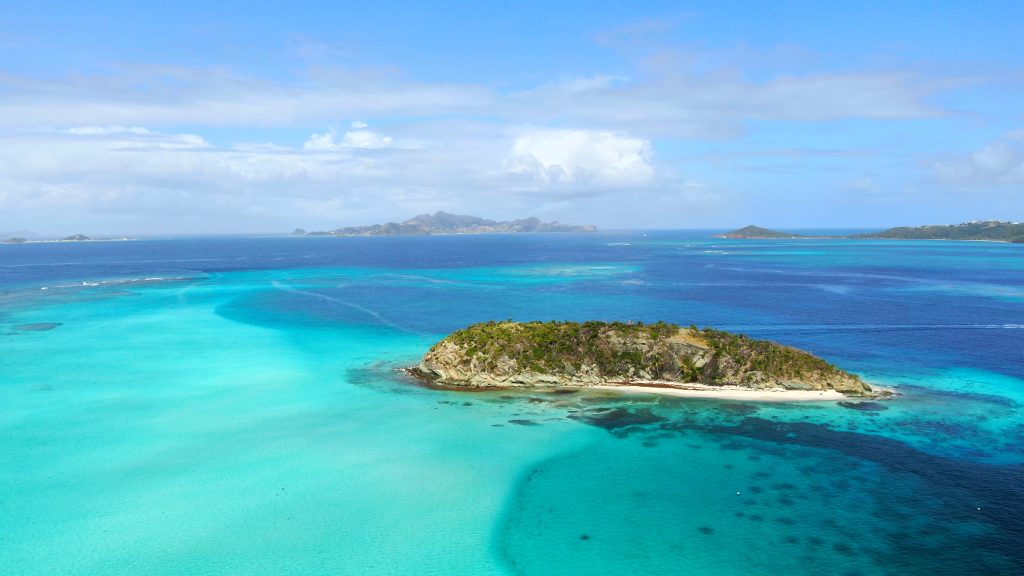
The real budget of a catamaran cruise in the West Indies
This is the subject on which initial estimates are most often underestimated. The price of the boat rental is the main item for a week’s cruise, but it is far from being the only one. A crew that only plans for the cost of the charter regularly finds itself with unexpected expenses on board.
Boat rental according to the type of boat chosen
Prices vary significantly depending on the type of boat, the period and the formula chosen. Here are some indicative data on our rates:
| Formula | Prices for 4 days / 3 nights | Price per week | For this budget… |
| 38–40 ft bareboat catamaran | From €1,900 | From €3,200 | 2 to 8 people, autonomous navigation, complete freedom of itinerary |
| 42–46′ bareboat catamaran | From €2,400 | From €3,800 | 4 to 10 people. Bali 4.4 or 4.6: optimal comfort for a family or a group of friends |
| 42–48 ft catamaran with skipper | 5 days minimum | From € | Expert skipper of the area included. Ideal if the crew does not have sufficient experience. |
| Fully Crewed Catamaran | 5 days minimum | From € | Skipper + hostess/cook. Turnkey holidays, no logistical constraints |
Costs that no one mentions right away
To be systematically added to the rental price in your provisional budget:
Fuel: about 500 € per week for mixed use of sail and engine. In low season with little wind, consumption may be higher.
Marina and anchorage fees: between €0 (anchor) and €100 per night in a marina. Most buoy moorings in the French West Indies cost €10 to €30 per night. In Saint Lucia and the Grenadines, €20 to €50 per night. Most of the time you can anchor for free in the sheltered bays
Provisioning: count €150 to €200 per person per week of cruise for a classic supply at Le Marin at the beginning of your stay. Rides in foreign islands can be more expensive.
Inter-island customs formalities: between €30 and €80 per stopover in a foreign country. Plan for cash in East Caribbean dollars (XCD) or USD. The credit card is also accepted at customs offices
Cancellation insurance: recommended if your group includes people whose schedules may change. It protects in the event of a teammate defecting at the last minute.
Realistic total budget for a week of cruising for 6 people. Skippered charter (Bali 4.4, high season): €5,500. On-board cash (fuel + moorings + formalities): €700 to €1,200. Provisioning: €600 to €800. Total: €6,800 to €7,500, or €1,150 to €1,250 per person for a week at sea in the West Indies.
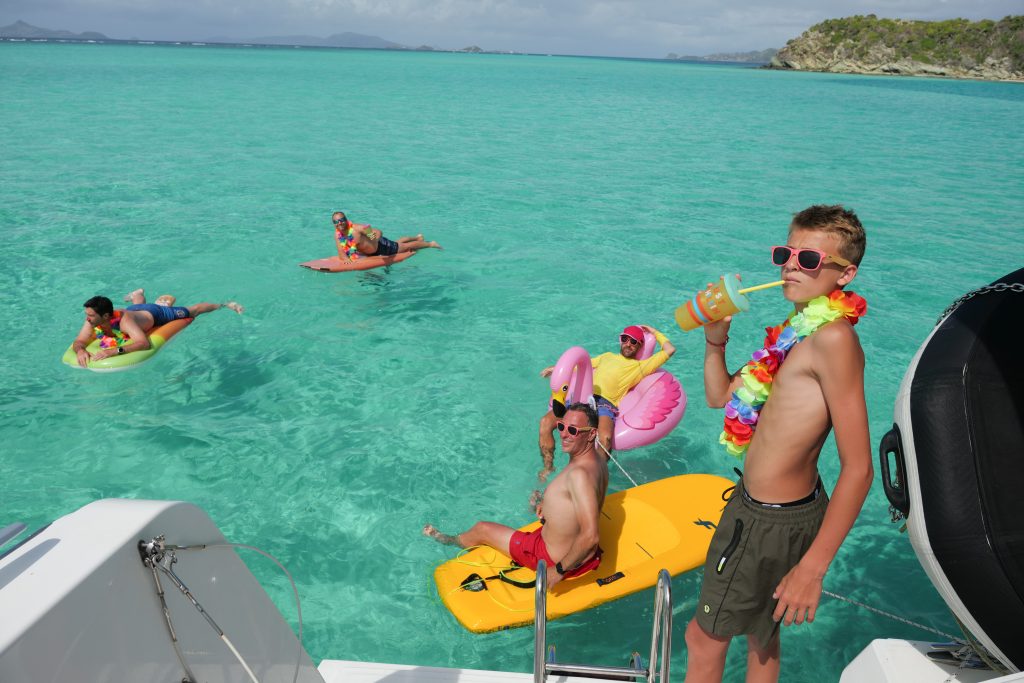
Choosing your formula before you set off: without a skipper, with a skipper or a full crew?
The choice of formula conditions the entire organization of the cruise and largely depends on the type of cruise you are considering. It’s better to do this as soon as you book rather than trying to adjust after check-out. Here are the three typical profiles.
The bareboat formula is suitable for everyone with at least one crew member having sufficient sailing experience (see our article on the conditions and levels required for bareboat charter). This is the formula that offers absolute freedom but also total responsibility for navigation and safety.
The skippered formula is the best choice, and often the best way to discover the area, for a first stay in the West Indies, a family with young children, or any group where no member has enough experience to take on the piloting alone. Calling on the service of a RentSailBoat skipper also means benefiting from his reassuring presence and his knowledge of confidential anchorages — a real learning opportunity for novice crew members, without risk to the safety of the boat.
The full crew formula (skipper + hostess/cook) transforms the cruise into a turnkey stay. More expensive, it removes all logistical constraints and is suitable for groups who want to focus on discovery and relaxation without worrying about navigation or meals.
Planning your cruise itinerary from Le Marin: the main routes according to duration
The marina of Le Marin, in the south of Martinique, is one of the best positioned departure points in the Caribbean. It gives access to two main navigation routes and allows you to build varied cruise itineraries according to the length of your stay and your type of cruise.
| Duration | Recommended route | Key distances | Level and grades |
| 3 to 5 days | Tour of the south of Martinique + Sainte-Anne, Les Salines, Diamant | 5 to 20 miles per leg | Ideal for getting your bearings. Protected coastal navigation, sumptuous anchorages, no customs formalities. |
| 1 week | Martinique → Saint Lucia (Rodney Bay, Marigot Bay, Pitons) → Martinique | Saint Lucia: 30–35 mins / 4 hours of sailing | Crosswind crossing in the trade winds. Intermediate level. Customs formalities to be provided on arrival. |
| 10 days | Martinique → Saint Lucia → Saint Vincent → Bequia → Martinique | Bequia: 85 miles from Martinique, stage or night of navigation | Experienced sailors. Several offshore crossings. Saint-Vincent formalities. Early Grenadines. |
| 2 weeks or more | Full Grenadines Loop or Martinique → Guadeloupe (north) | Tobago Cays: 140 minutes from Martinique. Guadeloupe: 100 mn north | Experienced skippers. Classic Grenadines Tour: Bequia, Mustique, Canouan, Mayreau, Tobago Cays, Union, Grenada. |
Whatever the destination chosen, each island in the archipelago has its own character: some invite you to hike and discover the interior, others are more suitable for lazy days on the anchorage line, between swimming and relaxing on deck. The best way to take advantage of this diversity is not to overload your itinerary: two or three well-chosen destinations are better than an overly ambitious program that turns cruising into a race against time.
From the airport to the shore: practical steps
Fort-de-France’s Aimé Césaire Airport is about a 45-minute drive from Le Marin Marina, your starting point. If you arrive in the evening, it is recommended to spend the first night at the quay in Le Marin rather than going straight to sail: recover from your trip, familiarize yourself with the boat, do your shopping for provisioning and sleep before weighing anchor.
Check-in with the RentSailBoat team takes place the next morning. Allow two to three hours for the complete briefing: boat systems, navigation electronics, safety equipment, specifics of customs formalities for your planned stopovers, useful contacts and anchorage recommendations. This time should not be shortened, it conditions the safety and serenity of the entire cruise.
The port of Le Marin has a supermarket and several refuelling stalls on the quay. Take the opportunity to load the boat with fresh water, fuel, food and drinks for the first few days. In the Grenadines and Saint Lucia, provisions are available but often more expensive than in Martinique.
Documents to have on board
In the French islands (Martinique, Guadeloupe, Saint-Martin on the French side): identity document (national card or passport for French and EU nationals). No specific boat license is mandatory, but the nautical CV and the boat documents provided by the operator are essential.
In foreign islands (Saint Lucia, Saint Vincent, Grenadines, Dominica): passport required for all crew members. Entry forms to be filled in at each clearance. Boat documents (navigation license, insurance) provided by the operator.
On the water: what you need to know to sail in the West Indies
Navigation in the Caribbean archipelago has its particularities. Some good practices to know before you set sail.
The trade winds blow from east-north-east to east-south-east with remarkable regularity from November to June. This means that the route south (to the Grenadines) is crosswind or downwind — fast and comfortable. The route back north can be more sporty and requires tacking. Planning the return with time in hand is a basic precaution.
Buoy anchorages are common in the West Indies, especially in natural protection areas. Never anchor on coral: Look for white sand visible through the water and check that the anchor is securely attached before leaving the deck. In reserves (such as the Tobago Cays), anchorages are exclusively on buoys.
The weather is monitored daily. Check the coastal bulletin of Météo France Antilles (available on VHF channel 16 or on the meteo.gp website) every morning before weighing anchor. In the event of a squall visible on the horizon (dark cumulonimbus cloud), bring the sails in advance: tropical squalls rise quickly and can reach 30 to 40 knots momentarily.
Think about the crew’s sun protection. The reverberation on the water is intense even in cloudy skies. Sunscreen, lycra and hat are essential, especially for children. It is a simple thing but often forgotten in the preparations.
Respect the protection zones. Several anchorages and natural parks in the West Indies have specific rules: anchoring prohibited, fishing prohibited, marked swimming areas. Fines can be high. The RentSailBoat team will brief you on the relevant areas according to your itinerary and can provide assistance if you have any doubts during the cruise.
To remember
The high season (December to April) is the ideal period. Regular trade winds, no cyclones, perfect temperatures. In return: maximum rates and busy anchorages. To be booked 6 months in advance for the Christmas and school holiday periods.
August to October = low season and maximum cyclone risk. Most operators close or restrict navigation areas during this period. Do not plan a cruise during these months without confirmed weather expertise and specific insurance.
The actual budget for a week’s cruise systematically exceeds the charter price. Fuel, marina and mooring fees, provisioning and customs formalities must be included in the provisional budget at the time of booking.
Spend the first night docked in Le Marin before sailing. Check-in and briefing are essential. Never leave on the day of arrival by plane. Take advantage of the port to refuel and to familiarize yourself with the boat before weighing anchor.
The passport is mandatory as soon as you leave French waters. Martinique and Guadeloupe: identity card is sufficient for French and EU nationals. Saint Lucia, Saint Vincent, Grenadines: passport required for all crew members.
The trade winds make the route south easier, complicating the return. The Martinique → Grenadines route is crosswind (fast and comfortable). The return to the north is often upwind. Always allow a one-day margin for the return, regardless of your original starting point.
For availability, rates and reservations, consult the page dedicated to catamaran charter in the West Indies where the types of boats available, the packages with or without a skipper and the booking terms are detailed.
Ready to plan your cruise? Check availability, packages and rates on our catamaran charter page in the West Indies, or contact the team in Le Marin for a personalized quote according to your project.
Frequently asked questions
When is the best time to rent a catamaran in the West Indies?
The high season, from December to April, offers the best weather conditions: regular trade winds, little rain, no risk of cyclones. It is also the busiest and most expensive period. For better value for money, May, June and November are interesting alternatives with still very pleasant conditions and reduced rates.
What budget should I plan for a week of catamaran cruise in the West Indies for 6 people?
Count about €7,500 for boat rental only, mandatory options included (cleaning and dressing of the boat) for a skipperless formula on a Bali 4.4 in high season. If you take your provisioning on your own without resorting to the provisioning option offered by RentSailBoat, count on a budget of 800€ for 6 people. Count 500€ for diesel and water, and a total of 400 euros approximate for customs formalities and mandatory buoys in protected areas, i.e. about 1,500 € per person for a week. With skipper, add an additional €1,750 (€250 / day) depending on the package chosen.
Do I need a passport to sail between the islands of the West Indies?
Only for stopovers outside France. In the French islands (Martinique, Guadeloupe, Saint-Martin on the French side), a national identity card is sufficient for French and EU nationals. For Saint Lucia, Saint Vincent, the Grenadines, Dominica or any other foreign island, the passport is mandatory for all crew members.
Can you rent a catamaran in the West Indies without sailing experience?
Yes, with a professional skipper. The skipperless formula is reserved for experienced sailors. For non-sailors or beginners, the charter with skipper allows you to fully enjoy the cruise without worrying about sailing.
What is the minimum duration for a catamaran cruise in the West Indies?
Private cruises depart for a minimum of 4 days and 3 nights in low season. This time allows you to sail to Saint Lucia and return with a day to settle in and the formalities. For a week, it is possible to combine Martinique and Saint Lucia comfortably. The Grenadines and Guadeloupe require a minimum of 10 days.
How to manage customs formalities between the islands?
Each entry into a foreign country requires a customs clearance at the island’s main marina (Rodney Bay in Saint Lucia, Kingstown in Saint Vincent). The RentSailBoat team will brief you on the specific steps for your itinerary at check-in, and provide you with the necessary boat documents for the formalities.